
The Cimbalom — King Among the Dulcimers
eThe cimbalom is a large concert hammered dulcimer from Central Europe: metal strings struck with mallets, a damper pedal, a chromatic range of four-plus octaves, developed in Budapest in the 1870s.
One family, many cousins — one king 👑
Here's a secret most people don't know: almost every musical culture on Earth, at some point, had the same brilliant idea. Stretch strings over a wooden box. Hit them with little hammers. Listen to them shimmer.
In Persia they called it the santur. In China, the yangqin (yes — that's my other instrument 🀄️). In Germany, the Hackbrett. In Ukraine, the tsymbaly. In Italy, the salterio; in France, the tympanon; in the Appalachian mountains of America, simply the hammered dulcimer. One big, noisy, beautiful family scattered across the globe.
But only one member of this family grew up to wear a crown. Only one got legs to stand on, a damper pedal like a piano's, a full chromatic range of more than four octaves — and sometimes a seat in the symphony orchestra, next to the violins and the timpani.
That one is the cimbalom. The king among the dulcimers. And its story — full of village weddings, Romani virtuosos, a love-struck Franz Liszt, and two Czech boys born on the very same day of the year — is one of my favorite stories in all of music. Let me tell it to you. 🎵
Where does the cimbalom come from? A legend and a detective story 🔍
Ask about the cimbalom's origins and you'll usually hear something like this: it's ancient — thousands of years old — born in Mesopotamia, carried west from Persia, the grandchild of the santur.
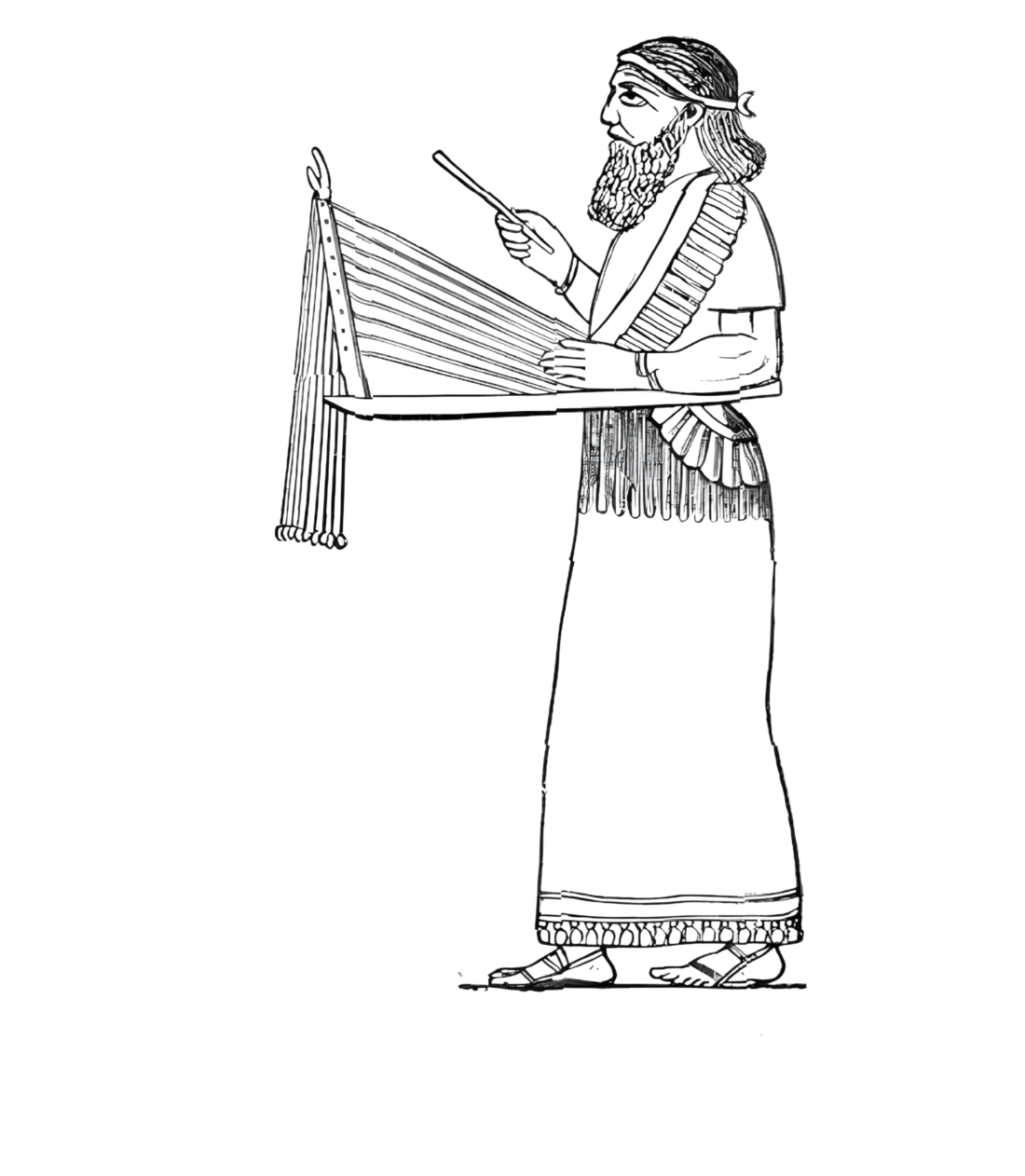
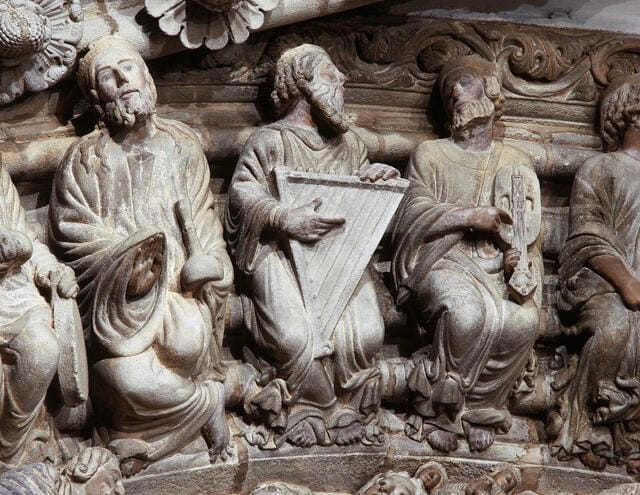
It's a beautiful story. People have been stretching strings over frames since roughly 1800 BC, and instruments like the santur and the qanun really are distant relatives of everything I play. The psaltery — the plucked cousin — reached Europe around the 11th century, and you can still find one carved in stone on the cathedral portal in Santiago de Compostela, finished in 1188.
But here's where it gets interesting. Modern researchers have gone through the old sources like detectives, and the verdict may surprise you: the hammered dulcimer — strings struck with mallets, the true ancestor of the cimbalom — most likely emerged not in ancient Asia, but in the eastern Alps, around the middle of the 15th century. From there it wandered into Central Europe, arriving in the Hungarian lands only in the late 1600s and early 1700s, carried by Jewish and Romani musicians playing in small village ensembles.
So is the cimbalom ancient and Eastern, or surprisingly young and European? Honestly — the experts still argue about it, and I love that. An instrument mysterious enough to keep historians busy is an instrument worth falling in love with.
One more character deserves a bow here: Pantaleon Hebenstreit, a German virtuoso around 1700 who built a hammered dulcimer so enormous and played it so dazzlingly that King Louis XIV of France decreed the instrument be named after him — Le Pantaleon. Not bad for a box with strings. 😄
The cimbalom: voice of the village 🎻
By the 18th century, the little cimbalom had found its home — and its people.
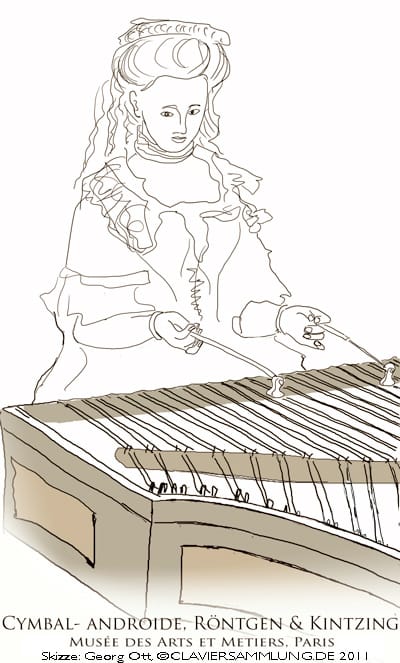
It was small enough to carry on a strap, and it slotted perfectly into the Romani bands of Central Europe: a violin singing the melody, a double bass holding the ground, and in the middle the cimbalom, rippling and sparkling like light on water. In village taverns, at weddings, in the cafés of Pest, this sound was the sound of celebration.
And people noticed it was capable of more. In 1861, Ferenc Erkel — the composer of the Hungarian national anthem — wrote the cimbalom into his opera Bánk bán: the first time it stepped onto the opera stage. In 1865, the great novelist Mór Jókai gave it a nickname that stuck: "the Hungarian piano."
There was just one problem. This beloved instrument was still a folk instrument — small, quiet, with no standard tuning and no way to stop the strings from ringing into each other. It had the heart of a king, but not yet the crown.
For that, it needed a maker of genius. And here, my Czech readers, is where you may want to sit down — because the crown came from Bohemia. 🇨🇿
Cimbalom history: the Czechs who crowned the king. 🇨🇿👑
Every king needs a crown-maker. The cimbalom got two — an uncle and a nephew, both born in small villages in Bohemia, and both born, I promise I'm not making this up, on the very same day of the year: the 19th of May.
József Schunda came into the world first, on 19 May 1818, in the village of Sibřina near Prague. He learned instrument-making the proper old-fashioned way: apprenticed in the workshop of the Prague master Horák, then off on the traditional journeyman's wanderings — first to Vienna, then onward to Pest, where a well-known instrument maker invited him to help run his shop. He ran it so well that on 16 January 1848 the firm was officially signed over to his name. The Schunda company of Budapest was born — founded by a Czech.
Twenty-seven years later and a few villages over, his nephew József Vencel Schunda — in Czech, Václav Josef Schunda — was born in Dubeč near Říčany, on 19 May 1845. In 1856 the uncle brought the eleven-year-old boy to Pest, and by 1871 the nephew was running the whole firm. The family business was in good hands. Very good hands, as it turned out.
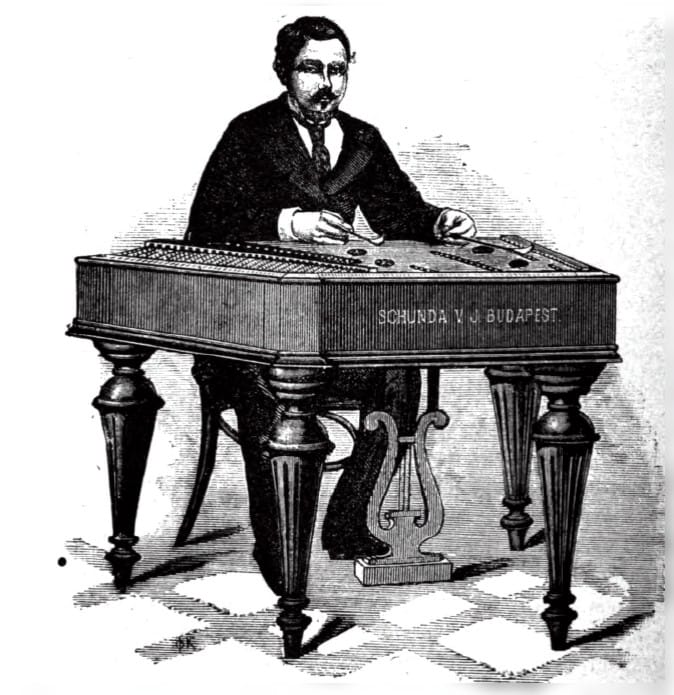
Because Václav Josef looked at the little folk cimbalom — the darling of the village bands, the "Hungarian piano" with no legs and no way to stop its strings from ringing — and decided to rebuild it into a true concert instrument.
He gave it legs, so the player could finally sit at it like at a piano. He gave it a strong inner frame to carry the enormous pull of all those strings. He expanded it to a chromatic range of more than four octaves and standardized the layout of the bridges and notes — a system so good that cimbalom players still use essentially the same one today, including me. And his most famous stroke of genius: the damper pedal. Press it, and the shimmering wash of sound stops on a dime. Before the pedal, players had tried damping the strings with leather straps tied to their legs — really! — and Schunda's first pedal actually worked backwards compared to a piano (the strings were open by default, and you pressed to silence them). Pianists kept getting confused, so he flipped it to work the piano way. The instrument I play today still says thank you. 😄
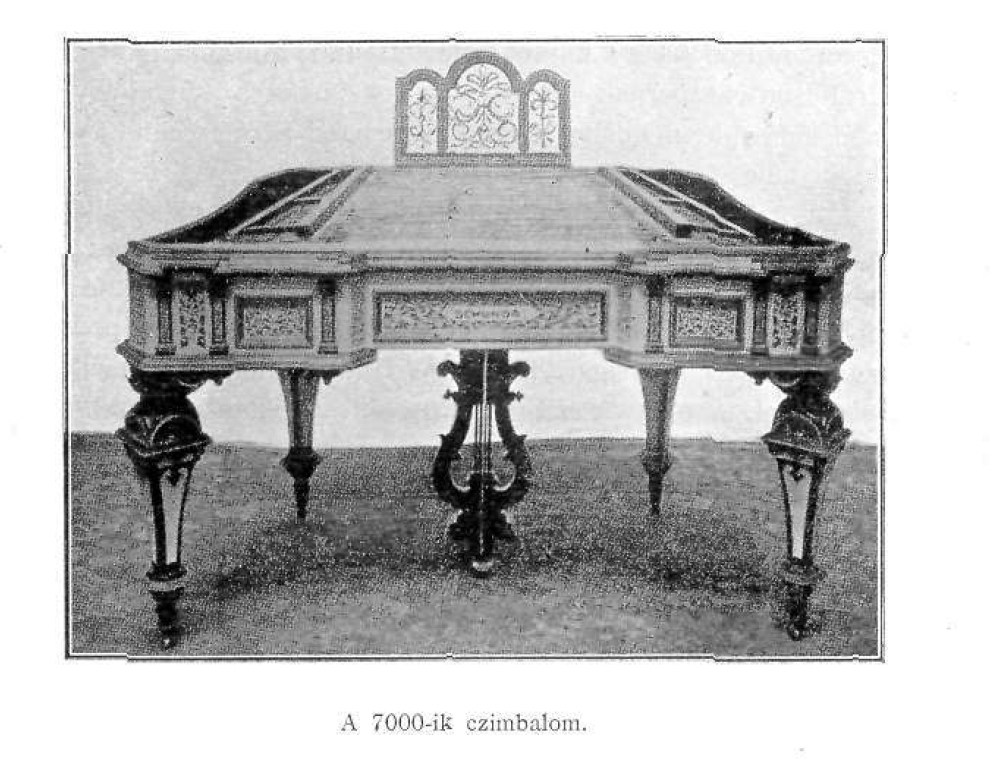
In 1874, Schunda’s first pedal cimbalom was presented to a small circle of musical connoisseurs in Budapest, with Pál Pintér associated with the instrument’s early demonstrations. It was a sensation: Liszt, Erkel, Richter, Ábrányi, Huber, and Allaga recognized its future, and Liszt compared Schunda’s achievement for the cimbalom to Érard’s transformation of the harp. Between 1874 and 1898, the Schunda factory built more than six thousand cimbaloms; by November 1906, it had completed the 10,000th. There were method books, published cimbalom literature, institutional classes, exhibitions, and public jubilees. Hungary had a new national instrument — designed and perfected in Budapest by a Czech-born maker from Dubeč.
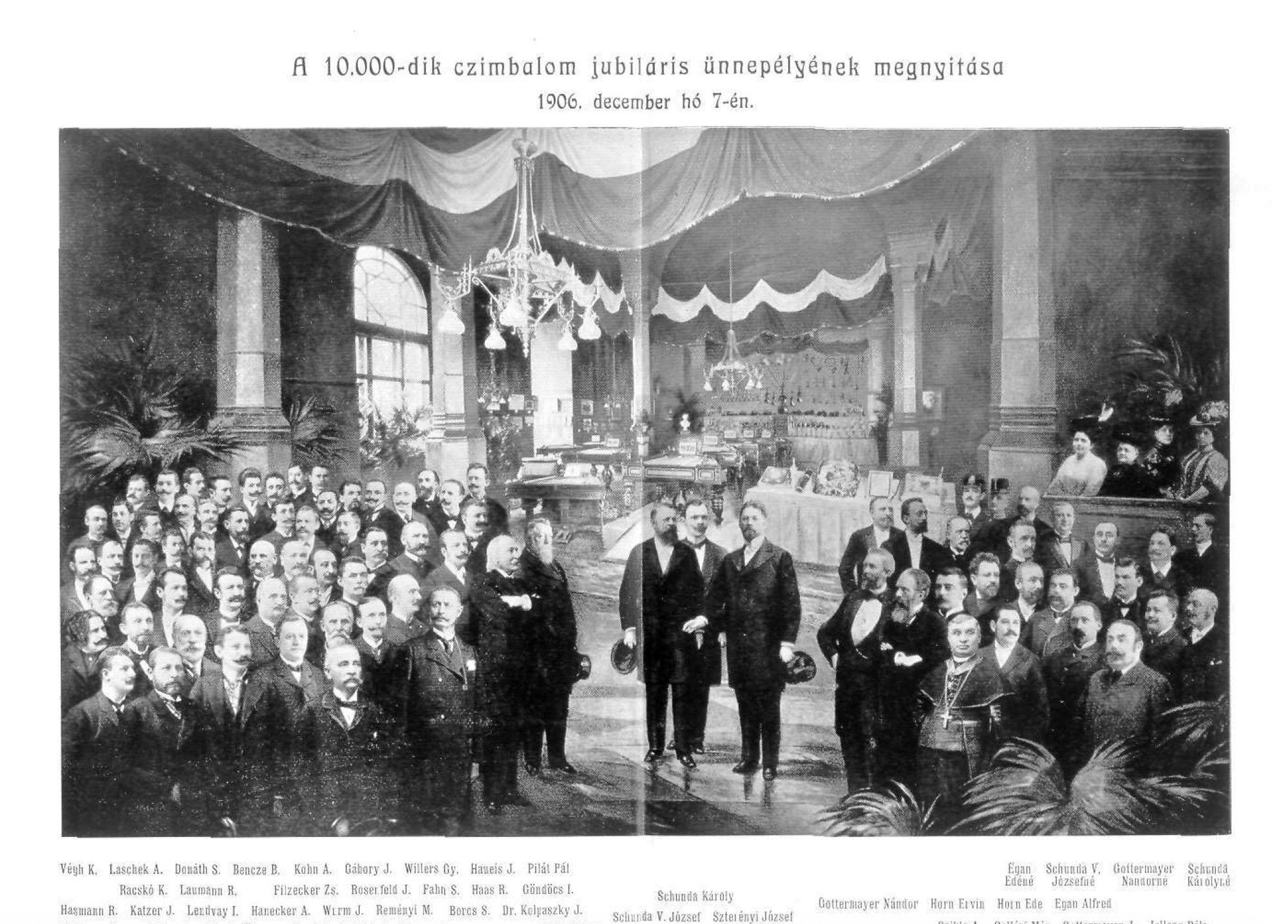
I love this part of the story, and not only out of patriotism. It says something true about music in Central Europe: the borders were never where the maps said they were. A Czech maker, a Hungarian capital, Romani virtuosos, and soon — as you're about to see — the most famous Hungarian musician in the world, who fell head over heels for the new instrument.
His name was Franz Liszt. 🎹
Liszt falls in love with the Cimbalom 🎹
Long before Schunda's pedal cimbalom existed, Franz Liszt was already obsessed with the sound of the instrument.
As a touring superstar pianist, Liszt had heard the Romani bands of Hungary up close, and he spent years trying to smuggle their cimbalom magic into his piano music. Listen to the Hungarian Rhapsodies and you can hear it: cascading arpeggios, shimmering trills, repeated notes hammered like mallets on strings. The critic Eduard Hanslick, reviewing one of Liszt's performances, marveled at his hammering with both hands on a single key to conjure the instrument — and declared Liszt's imitation of the cimbalom "quite inimitable."
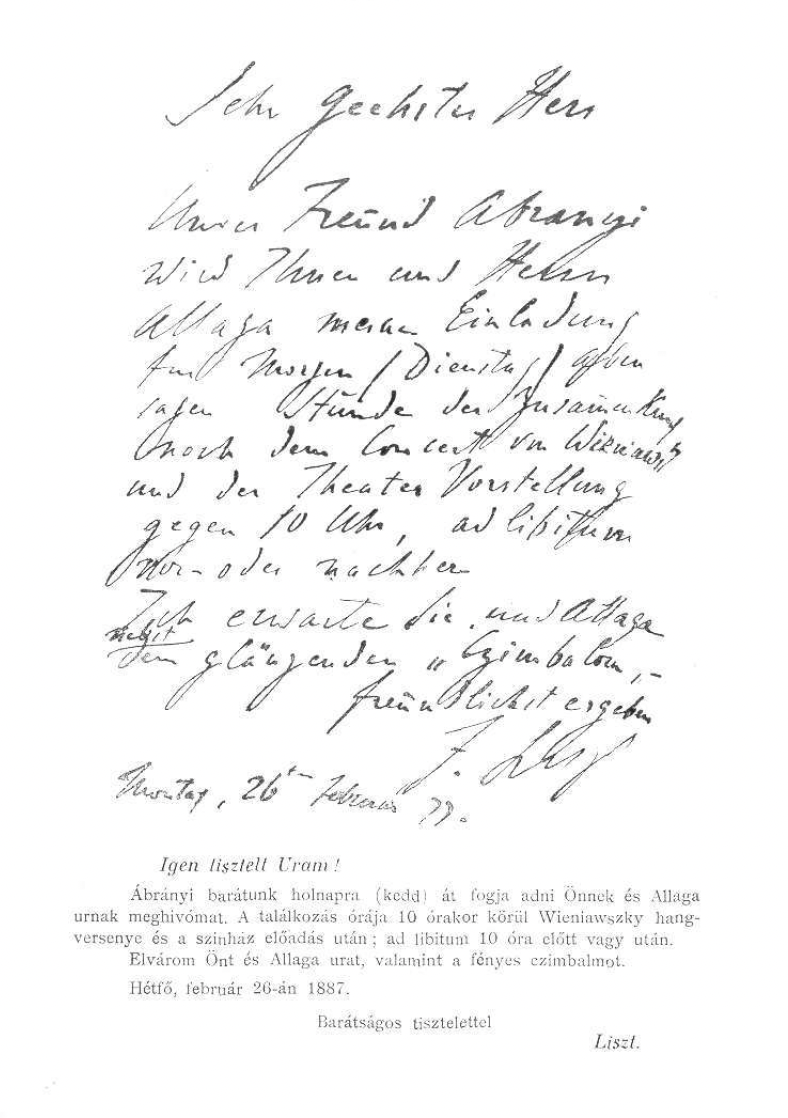
"I await you and Allaga — together with the splendid cimbalom." Franz Liszt's handwritten invitation, Monday, 26 February 1877: come after Wieniawski's concert, around 10 at night, and bring the instrument. (Reproduced in Schunda's 1907 book.)
Think about that for a second. The greatest pianist of the 19th century, sitting at the most powerful instrument of his age — trying his best to sound like a cimbalom. 😄
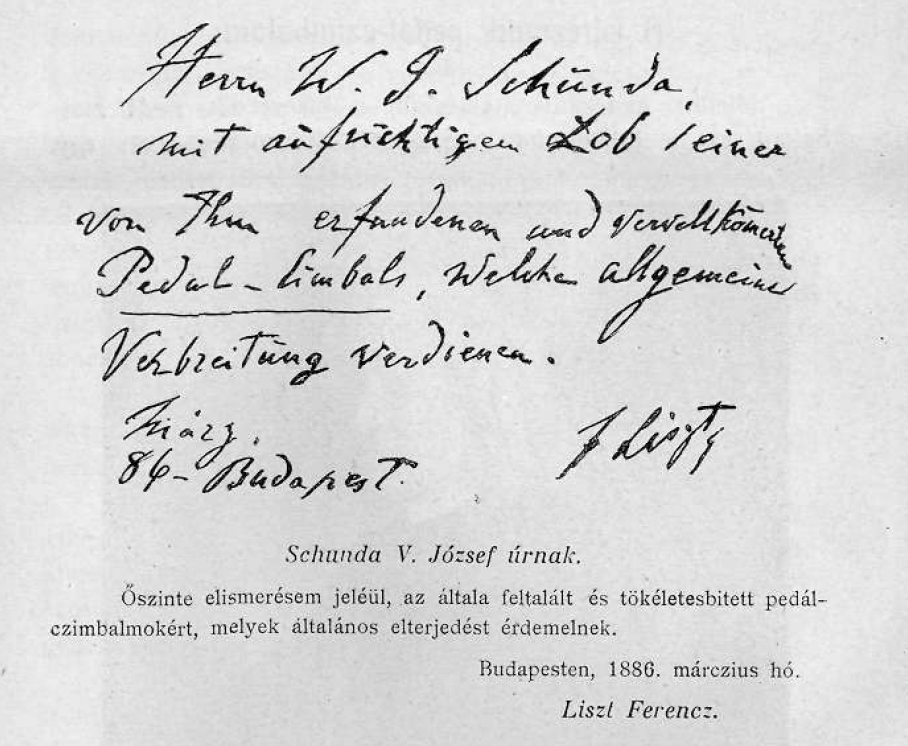
So when Schunda's new concert cimbalom appeared, Liszt didn't need convincing. In 1876 he wrote a real cimbalom part into his Hungarian Storm March — the instrument's ticket into the symphony orchestra, stamped by the most famous Hungarian musician alive. The very first cimbalom method book, written by Géza Allaga at Schunda's request in 1874, was dedicated to Liszt. And in March 1886, just months before his death, Liszt sent Schunda a signed photograph — a small gesture that tells you everything about how the composer felt about the maker.
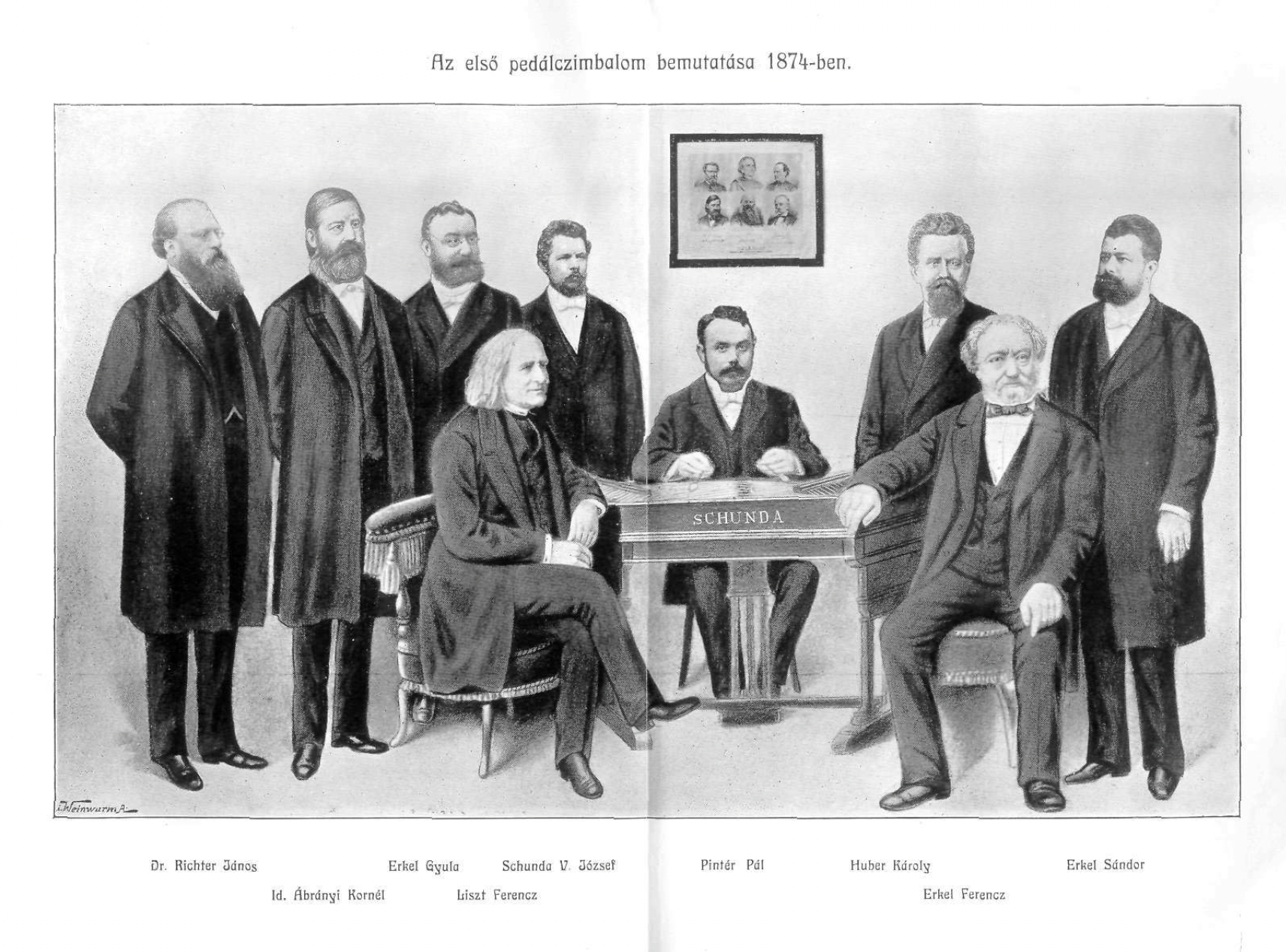
Schunda, by the way, was a marketing genius a century ahead of his time. He showed his instrument at an exhibition in Kecskemét in 1872 and then at the great international exhibitions — Paris, London — always making sure the local nobility and celebrities came to see it. There's even a famous picture of Schunda at his cimbalom in the company of Liszt and Erkel... which researchers now believe was probably a photomontage, assembled from a photo of Schunda with a cimbalist and some convenient body doubles. Nineteenth-century Photoshop! The composers' love for the instrument was real — the group photo, maybe less so. 😉
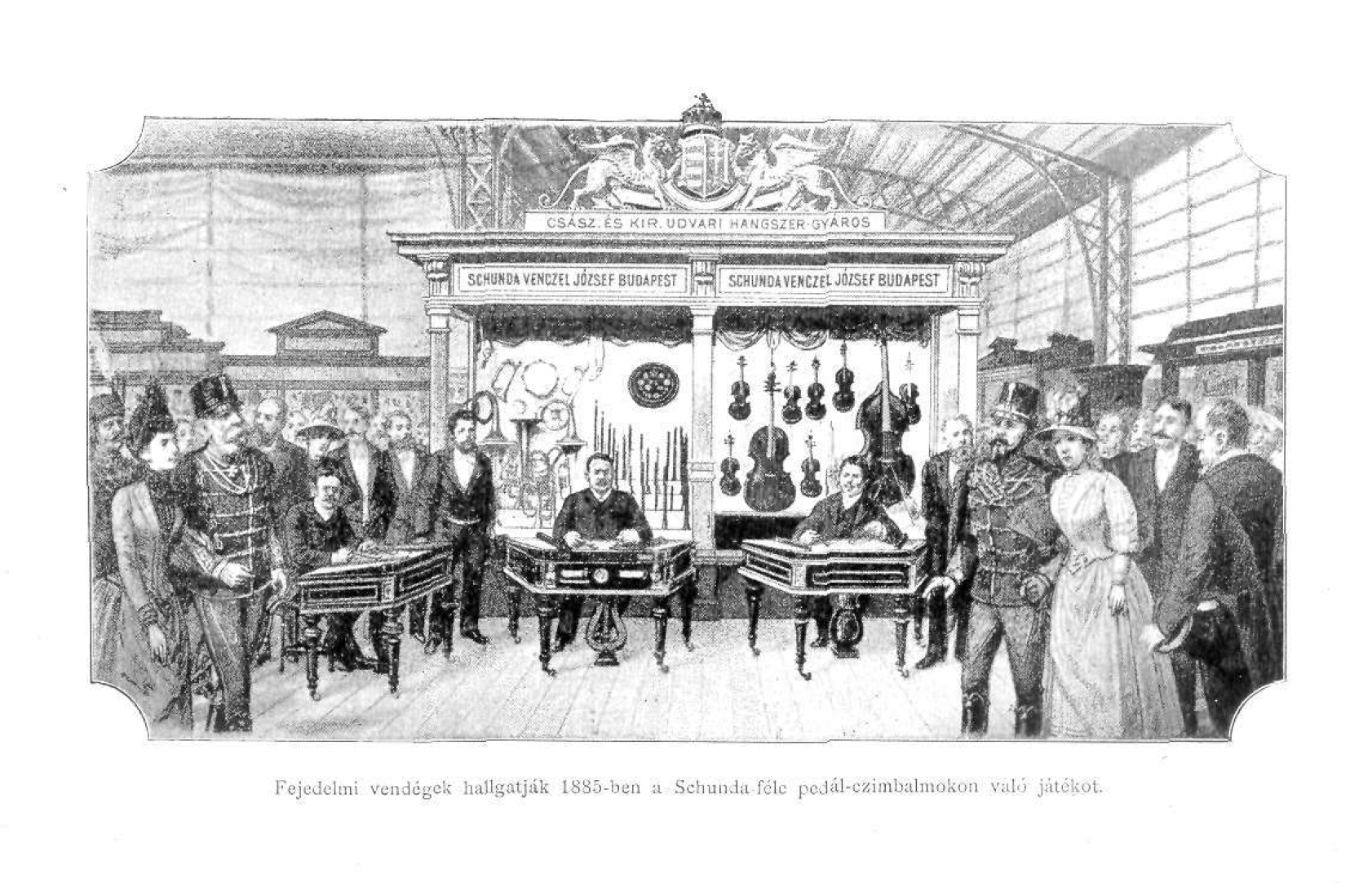
And the love spread. From 1890 you could study cimbalom at the National Conservatory in Budapest under Allaga himself, and from 1897 at the Academy of Music. Schunda's publishing series brought opera melodies, Chopin, Schubert and Beethoven into Hungarian living rooms — arranged for cimbalom, the way other families played piano. By 1900, the king among the dulcimers had everything: a throne in the orchestra, a chair at the academy, and a place by the family fireplace.
The 20th century was about to give it something even stranger and more wonderful: a Russian admirer named Stravinsky. 🪆
The Russian who bought a cimbalom 🪆
In the 1910s, in a café in Geneva, an exiled Russian composer heard a Hungarian cimbalist named Aladár Rácz — and lost his heart completely.
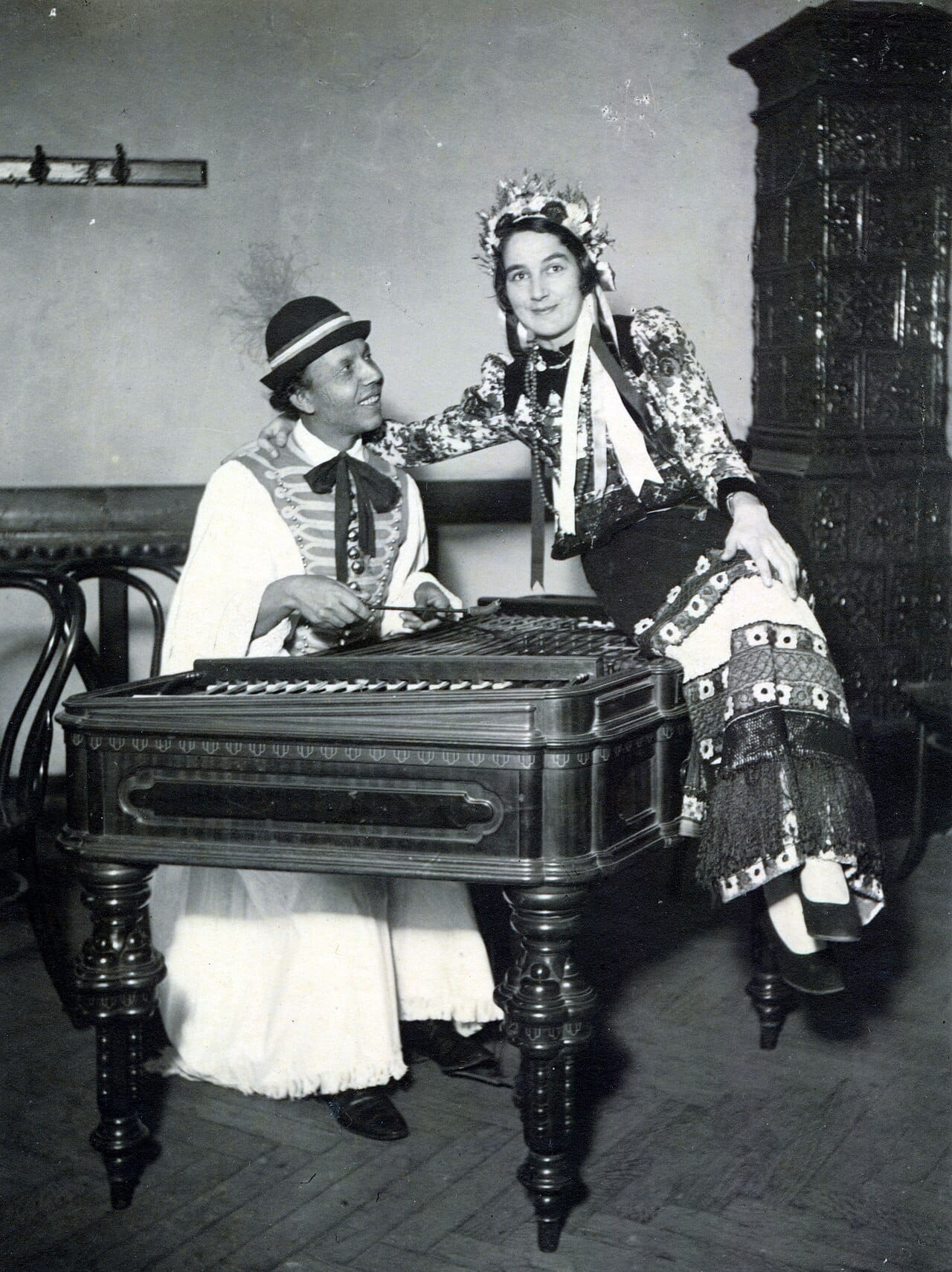
The composer was Igor Stravinsky. And he didn't just admire the cimbalom. He bought one. He learned to play it himself. And then he started writing it into his music: in Renard, his setting of a Russian folk tale, he used the Hungarian cimbalom to paint a Slavic sound-world (the king of dulcimers, happily wearing a Russian costume 😄). A year later, in Ragtime, the same instrument transformed again — this time into the jangly alter ego of an American saloon piano. He even sketched a version of Les Noces with two cimbaloms, abandoned partly because he couldn't find two players who could handle the parts. Some problems, I'm happy to report, have since been solved. 😉
Rácz, meanwhile, did something just as radical: in the 1920s he took the cimbalom onto the world's concert stages playing Bach and the Baroque masters, proving the instrument could speak any musical language ever written.
And the composers kept coming. Kodály gave the cimbalom its most famous orchestral moment in Háry János (1926) — if you've ever heard the cimbalom in a concert hall, it was probably there; the Berlin Philharmonic played the suite at its televised New Year's Eve concert. Bartók wrote it into his First Rhapsody (premiered 1929). Later came Kurtág, who built a whole intimate universe of cimbalom works, and a remarkable international list: Stockhausen, Eötvös, Boulez and the French modernists, even Frank Zappa (The Yellow Shark — yes, really).
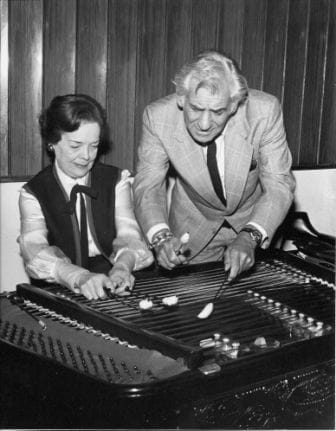
And the movies found it too. That mysterious shimmer in Howard Shore's The Lord of the Rings? Cimbalom. The Romani-tinged danger in Hans Zimmer's Sherlock Holmes: A Game of Shadows? A cimbalom part created by the Budapest virtuoso Jenő Lisztes. Chances are you've loved the sound of the cimbalom for years — you just didn't know its name.
The king today — and the crown comes home 🇨🇿
So where is the cimbalom now, 150 years after Schunda gave it the crown?
The instrument itself kept evolving. In the 1920s, the Budapest maker Lajos Bohák strengthened and enlarged Schunda's design — the "second generation" that most concert players used for the better part of a century. And then, in 2012, the story took a turn I'm personally very proud of: in the workshop of Vladimír Holiš in the Czech Republic, with master craftsmen Jiří Krpec and Jan Pustka, the first HOLAK cimbalom was completed — built for the Czech virtuoso Daniel Skála and described, with only a little hyperbole, as the first third-generation cimbalom: better balance across the range, a radically improved pedal that can finally damp even the highest strings, fifteen years of players' dreams built into wood and steel.
Notice what just happened. The concert cimbalom was born from the hands of two Czechs in Budapest — and its newest chapter is being written by Czech hands again, in a workshop in Moravia. The crown came home. 👑
And here's where the story becomes mine. Daniel Skála was my teacher at the Janáček Conservatory in Ostrava. Today I live in Beijing, where I play the cimbalom side by side with its Chinese cousin, the yangqin — two branches of the same family tree, reunited on one stage. When I perform, I'm not just playing an instrument. I'm carrying a 150-year story that runs from a village near Prague, through Liszt's Budapest and Stravinsky's Geneva, all the way to China — and now, maybe, to a stage near you.
Want the cimbalom on your stage? Whether it's a solo recital, a cimbalom-meets-yangqin lecture concert, or a soloist spot with your orchestra — let's make something together 🤝
Curious to hear it first? Head over to LISTEN 🎵
Quick questions about the cimbalom ❓
What is a cimbalom?
The cimbalom is a large concert hammered dulcimer from Central Europe: a trapezoid-shaped instrument with metal strings struck by mallets, standing on four legs, with a damper pedal and a chromatic range of more than four octaves. Its modern concert form was developed in Budapest in the 1870s by the Czech-born maker Václav Josef Schunda.
Is the cimbalom the same as a hammered dulcimer?
They're family, but not twins. "Hammered dulcimer" usually refers to the smaller folk instruments played around the world; the cimbalom is the family's concert grand — bigger, fully chromatic, with legs and a piano-style damper pedal, designed to hold its own in a symphony orchestra.
How many strings does a cimbalom have?
A standard concert cimbalom has 133 strings, grouped in courses of several strings per note — that's part of what gives it its rich, shimmering sound. The newest "third-generation" instruments go even further: my HOLAK cimbalom has 136.
Who invented the cimbalom?
Nobody invented the folk cimbalom — it grew out of centuries of European dulcimer tradition. But the modern concert cimbalom was created by Václav Josef Schunda (1845–1923), a Czech-born instrument maker in Budapest, who unveiled the first pedal cimbalom in 1874.
How do you pronounce "cimbalom"?
Roughly "TSIM-bah-lom" — the C sounds like the "ts" in "cats." Don't worry, everyone gets it wrong the first time. 😄
What famous music uses the cimbalom?
More than you'd think: Kodály's Háry János, Stravinsky's Renard and Ragtime, works by Liszt, Bartók and Kurtág — and on the big screen, Howard Shore's The Lord of the Rings and Hans Zimmer's Sherlock Holmes: A Game of Shadows. You've probably loved this sound for years without knowing its name.
Sources & further reading 📚
This page isn't just stories — everything here comes from real research and historical documents. If you want to dig deeper (and I hope you do!), here's what I used:
The deep history & myth-busting
- József Brauer-Benke, "A cimbalom hangszertípus történetének forráskritikai elemzése" [A Source-Critical Analysis of the History of the Cimbalom], Magyar Zene 57/1 (2019), pp. 68–93 — the detective work behind the "born in the Alps, not in ancient Asia" story.
- John Leach, "The Cimbalom" (1972) — a classic English-language introduction, including the older santur-descent view.
- "Cimbalom," Encyclopaedia Britannica Online.
Straight from the source: the Schunda story
- Schunda V. József, A czimbalom története [The History of the Cimbalom], Budapest: Buschmann, 1907 — the history of the instrument written by the man who crowned it himself.
- "Václav Josef Schunda," Czech Wikipedia — for the Czech side of the family story.
Liszt and the cimbalom
- Hyeon-ju Gim, "Interpretive Fidelity to Gypsy Creativity: Liszt's Representations of Hungarian-Gypsy Cimbalom Playing," Journal of the American Liszt Society 67 (2016), pp. 27–71 — how Liszt smuggled the cimbalom into his piano music.
The big picture, by the people who play it
- Viktória Herencsár, Svet cimbalu [The World of the Cimbalom] — a panoramic tour of the whole cimbalom world by the founder of the Cimbalom World Association.
- Luigi Gaggero, The Cimbalom: A Reference Guide for Performers and Composers — the modern repertoire, techniques, and the Stravinsky story.
The instrument today
- "Daniel Skála's Cimbalom of the Third Generation," HOLAK cimbaloms (holak.cz) — the birth of the newest chapter, in a Czech workshop.
- New York Philharmonic program notes, November 2023 — the cimbalom on the world's biggest stages today (including the Hans Zimmer film story).
And if you read all of this and still want more — that's a sign. Come hear it live.